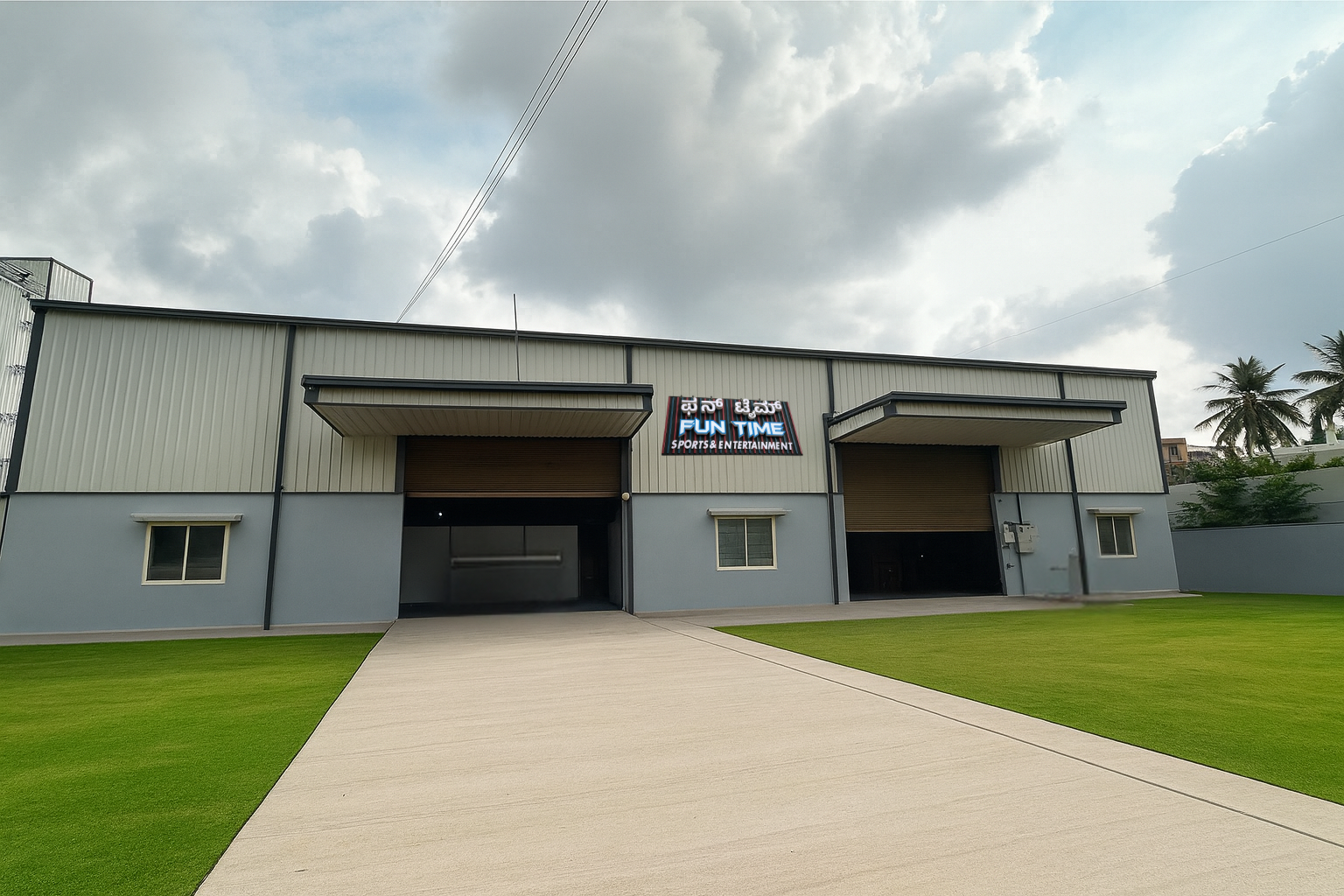
Starting a game zone is not simply a matter of renting a space, placing a few arcade machines inside it and opening the doors.
A commercially viable game zone needs the right location, the right mix of machines, enough space for customers to move comfortably, a practical payment system, dependable equipment support and a clear understanding of who you expect to visit.
We work with commercial buyers who are planning gaming spaces for malls, standalone entertainment venues, resorts, restaurants and other high-footfall locations. One thing we consistently see is that decisions made before purchasing the machines have a major influence on how smoothly the venue operates later.
If you are researching how to start a game zone business in India, this guide explains the major decisions you should work through before investing.
1. Decide What Type of Game Zone You Want to Build
The first question is not which arcade machine you should buy.
It is what kind of gaming experience you want to create.
A compact arcade inside a mall is very different from a large family entertainment centre. A gaming area attached to a restaurant has different requirements from a standalone destination where customers may spend several hours.
Your concept could focus on:
- classic arcade games
- sports-based interactive games
- skill and challenge games
- virtual reality experiences
- family entertainment
- children’s games
- competitive multiplayer activities
- experiential attractions
- or a combination of several formats
Your concept influences almost every decision that follows, including floor area, electrical planning, machine selection, staffing and customer pricing.
If you are planning a complete commercial venue rather than buying individual machines, our gaming zone setup solutions in India can help you understand the broader requirements involved in building the space.
2. Understand Who Will Actually Visit the Venue
A machine that works well for teenagers may not necessarily be suitable for young children. Similarly, a game zone built mainly for families should not be designed in the same way as one aimed at college students or corporate groups.
Before finalising equipment, define your primary audience.
For example, a mall-based game zone may attract families, children, teenagers and casual walk-in visitors throughout the day. A gaming centre close to colleges may see stronger demand for competitive games and multiplayer formats. Resorts may benefit from activities that can be enjoyed by groups with different age profiles.
Understanding the customer determines the machine mix.
It also helps you decide whether the venue needs short-duration games with quick turnover or longer experiences that encourage customers to remain inside the entertainment area.
3. Evaluate the Location Before Committing to the Space
Location is one of the most important variables in a game zone business in India.
High rent does not automatically mean high revenue, and low rent does not automatically make a property attractive.
Look at the quality of footfall rather than only the number of people passing the property.
Important factors include:
- proximity to families and your target audience
- nearby restaurants, cinemas and shopping destinations
- weekend versus weekday traffic
- visibility from the main circulation area
- parking availability
- public transport access
- competing entertainment venues
- ceiling height and usable floor area
- electrical capacity
- noise restrictions
- fire and building requirements
- and whether the property allows entertainment operations
A mall location may already have significant visitor traffic, but operating costs and space limitations can be higher. A standalone venue may offer more flexibility, but you may need stronger local marketing to generate visits.
We recommend evaluating the entire operating environment before deciding how much equipment the location can realistically support.
4. Plan the Game Zone Layout Before Ordering Machines
Buying machines first and figuring out where to place them later is a common mistake.
Every machine needs more than its physical footprint. Players need room to stand, move and queue. Staff need enough access for cleaning and maintenance. Certain games also need larger safety clearances because of how players interact with them.
Start with a floor plan.
Divide the space into logical activity zones. For example, you might position high-energy competitive games together while keeping children’s machines in a more accessible area.
Your layout should account for:
- machine dimensions
- player movement
- queues
- entry and exit flow
- reception or payment counter
- seating
- electrical points
- emergency access
- maintenance access
- storage
- and visibility from the entrance
Good layout planning can also help customers discover more of the venue instead of clustering around only the first few machines.
5. Build a Balanced Arcade Machine Mix
One of the biggest decisions when starting a game zone business is determining which machines to install.
We generally recommend thinking in categories rather than choosing machines individually.
A balanced venue can include different forms of gameplay so customers are not repeatedly offered the same experience.
For example, sports-oriented areas might include experiences such as a Cricket Simulator, basketball games or air hockey.
Competitive customers may prefer reaction, strength or skill-based machines, while families may respond better to simple games that are easy to understand without instructions.
Your venue could include combinations of:
- sports games
- racing games
- shooting games
- skill challenges
- reaction games
- VR experiences
- multiplayer games
- children’s games
- redemption-style activities
- and classic arcade formats
You can explore our broader range of arcade and interactive gaming machines while planning the mix.
The objective is not to fit the maximum possible number of machines into the venue. It is to create enough variety that different customers can find something they want to play.
6. Match Machine Size With Your Available Space
Large-format attractions can become visual anchors inside a game zone, but they also consume valuable floor area.
Smaller games can help increase the number of playable stations, particularly in compact commercial spaces.
A useful approach is to combine a limited number of larger attraction machines with several medium and compact games.
Before confirming any machine, check its actual dimensions and operating clearance against your floor plan.
Do not assume that because a machine technically fits, it will work comfortably once customers are using it.
7. Decide How Customers Will Pay to Play
Your payment model should be considered during the planning stage.
Depending on the venue and equipment configuration, operators may use systems such as cards, tokens or other controlled payment mechanisms.
The right approach depends on how you want customers to purchase and consume gameplay.
You should think about:
- ease of use
- transaction tracking
- recharging or top-ups
- staff involvement
- customer queues
- promotional packages
- and integration with your operating model
The payment system should make playing easier, not introduce additional friction.
8. Plan Your Investment Around the Entire Setup
One of the first questions buyers often have is how much it costs to start a game zone.
There is no single figure that applies to every project.
Your total investment depends on variables such as:
- city and property cost
- size of the gaming area
- number of machines
- type of machines
- interior work
- electrical infrastructure
- payment systems
- branding and signage
- staff
- deposits and licences
- maintenance planning
- and launch marketing
A smaller game zone with compact machines will have a very different investment requirement from a large entertainment centre using multiple interactive attractions.
Instead of starting with the question, “How many machines can I buy for this budget?”, we recommend asking, “What gaming format can this budget support sustainably?”
That leads to better purchasing decisions.
9. Consider Maintenance Before Buying Equipment
Commercial arcade machines operate in demanding environments.
They may be used repeatedly throughout the day by customers who have different levels of familiarity with the equipment. Components therefore need routine inspection, cleaning and occasional servicing.
Downtime matters because a machine that cannot be played is occupying commercial floor space without serving customers.
Before purchasing equipment, ask practical questions about:
- service support
- spare-parts availability
- routine maintenance requirements
- electrical components
- mechanical wear points
- troubleshooting
- and how faults are handled
Because we work directly with the design and manufacturing of arcade and interactive gaming equipment, our manufacturing capabilities are particularly relevant for commercial buyers who want to understand how their machines are built and supported.
10. Think Beyond the Opening-Day Machine Mix
A game zone does not necessarily need to remain unchanged after launch.
Customer behaviour can tell you a great deal.
Some machines may consistently attract queues. Others may perform better with certain age groups or during specific times of day. A machine that works well in one venue may behave differently in another because the customer profile is different.
Track what happens after opening.
Useful operating observations include:
- plays per machine
- customer waiting times
- repeat usage
- downtime
- peak periods
- age groups using different games
- and games that customers frequently ask about
Over time, you can use this information when deciding whether to add, replace or reposition machines.
11. Include a Few Machines That Create Visibility
Not every machine plays the same commercial role.
Some machines generate direct gameplay while others also help make the venue look active from outside.
Large, energetic or competitive games can attract attention from people walking past the game zone.
For a mall location, this can be especially valuable because customers may discover the arcade while shopping rather than visiting specifically to play.
We work with operators planning arcade games for malls, where visibility, footprint and broad audience appeal are particularly important considerations.
The same principle can be applied to other venue types: give customers a reason to notice the entertainment area before expecting them to enter it.
12. Plan Staffing Around Your Machine Mix
Some games require very little explanation. Others may benefit from staff guidance, particularly when customers encounter the experience for the first time.
Your staffing needs will therefore depend partly on your equipment.
Employees may be responsible for:
- customer assistance
- payment or card support
- machine resets
- basic troubleshooting
- cleanliness
- queue management
- safety monitoring
- and reporting faults
Training staff on the basic operation of every machine can reduce unnecessary downtime and improve the customer experience.
13. Consider Customisation When Standard Machines Do Not Fit
A standard catalogue machine may work perfectly for many venues.
However, certain projects have different requirements because of space constraints, branding, gameplay concepts or activation objectives.
In these cases, custom equipment may be worth considering.
We work on custom arcade machine manufacturing when a commercial project requires something beyond a standard machine configuration.
Customisation should have a clear reason behind it. It should solve a practical requirement rather than simply make the project more complicated.
14. Prepare for the Business Side Before Launch
The gaming floor is only one part of the operation.
Before opening, you also need to plan the administrative and commercial side of the business.
Depending on your location and business structure, this may involve relevant registrations, local permissions, building requirements, tax compliance and operating approvals.
Requirements can vary by state, city, property and type of entertainment offered, so these should be verified with the relevant local authorities and professional advisers.
You should also establish procedures for:
- daily opening and closing
- machine inspections
- cash or payment reconciliation
- maintenance reporting
- customer complaints
- cleaning
- staff responsibilities
- and incident management
A well-run game zone usually depends just as much on operating discipline as on the machines themselves.
15. Launch With a Reason for People to Visit
Once your venue is ready, you still need customers to discover it.
Your launch plan could combine local digital marketing with activity inside the venue.
Depending on your audience, this may include:
- Google Business Profile optimisation
- local social media campaigns
- mall promotions
- opening events
- group packages
- birthday activities
- corporate bookings
- school or college outreach
- repeat-play promotions
- and partnerships with nearby businesses
The right marketing mix depends on your location and customer profile.
A game zone inside an established mall may depend heavily on walk-in discovery, while a destination venue may need stronger online acquisition.
Common Mistakes to Avoid When Starting a Game Zone
Most planning mistakes happen when one part of the project is considered in isolation.
For example, choosing machines based entirely on appearance ignores maintenance and audience fit. Selecting a property purely because of low rent ignores footfall. Filling every available square metre with equipment ignores customer movement.
Before investing, avoid these common mistakes:
- buying machines before finalising the layout
- choosing every machine for the same age group
- underestimating maintenance access
- ignoring electrical requirements
- overcrowding the gaming floor
- selecting machines purely because they are popular elsewhere
- assuming revenue without studying local demand
- and spending the entire budget on equipment without allowing for other setup costs
Your game zone should function as one commercial system rather than as a collection of unrelated machines.
How We Approach Game Zone Projects
When buyers approach us about a new gaming venue, we prefer to start with the business requirement.
We look at the proposed space, target audience, type of venue and the experiences the operator wants to create before discussing the right equipment mix.
That makes it easier to identify where larger attractions make sense, where compact games are more practical and how different machine categories can work together.
Our objective is not simply to place more machines inside a venue. We help buyers think about how the overall gaming floor should function commercially and operationally.
FAQs About Starting a Game Zone Business in India
How much space is required to start a game zone?
There is no fixed minimum that applies to every project. The required area depends on the number and dimensions of the machines, customer circulation, reception space and any additional facilities you plan to include. We recommend developing the layout before finalising the equipment.
How much does it cost to start a game zone business in India?
The cost varies significantly based on the property, city, interior work, number of machines, machine categories, payment system and other operating requirements. A realistic budget should include the complete setup rather than arcade machines alone.
Which arcade machines should I buy first?
Start with your audience and venue type. We normally recommend creating a mix of game categories rather than purchasing several machines that deliver very similar experiences.
Can I start a game zone inside a shopping mall?
Yes, malls are a common environment for arcade and interactive entertainment. However, available area, lease terms, electrical requirements, mall operating rules and customer demographics should all be evaluated before deciding on the machine mix.
Is an arcade game zone profitable?
Profitability depends on factors including footfall, rent, machine utilisation, pricing, operating costs, downtime and repeat visits. We recommend building projections using realistic assumptions for your own location rather than relying on generic revenue claims.
Can the game zone be expanded later?
Yes. In many cases, operators can add or replace equipment as they understand customer behaviour better. Planning electrical infrastructure and floor circulation with future changes in mind can make expansion easier.
Build the Game Zone Around the Business, Not Just the Machines
Starting a game zone business in India requires decisions about much more than arcade equipment.
The strongest starting point is a clear understanding of your customers, available space, location economics and commercial objectives. From there, you can build a machine mix and layout that suits the venue rather than trying to make the venue fit around machines purchased too early.
If you are planning a new arcade, gaming zone or family entertainment space, talk to our team. We can help you evaluate the machine mix and equipment requirements for your proposed venue.